Get weeklyl PropTech insights, exlusive reviews, and industry trends delivered straight to your inbox.

Submit Your Product

Fill out the form below and we'll review your submission within 2-3 business days.
Contact HomeCode
Fill out the form and we'll get in touch with you as soon as possible
Request a Research Panel
Tell us about your product and research needs
Log In to


Signup
Password Reset
Main Content
Jonathan Spears: How MyOps Centralizes Operations

Jonathan Spears
March 25, 2026
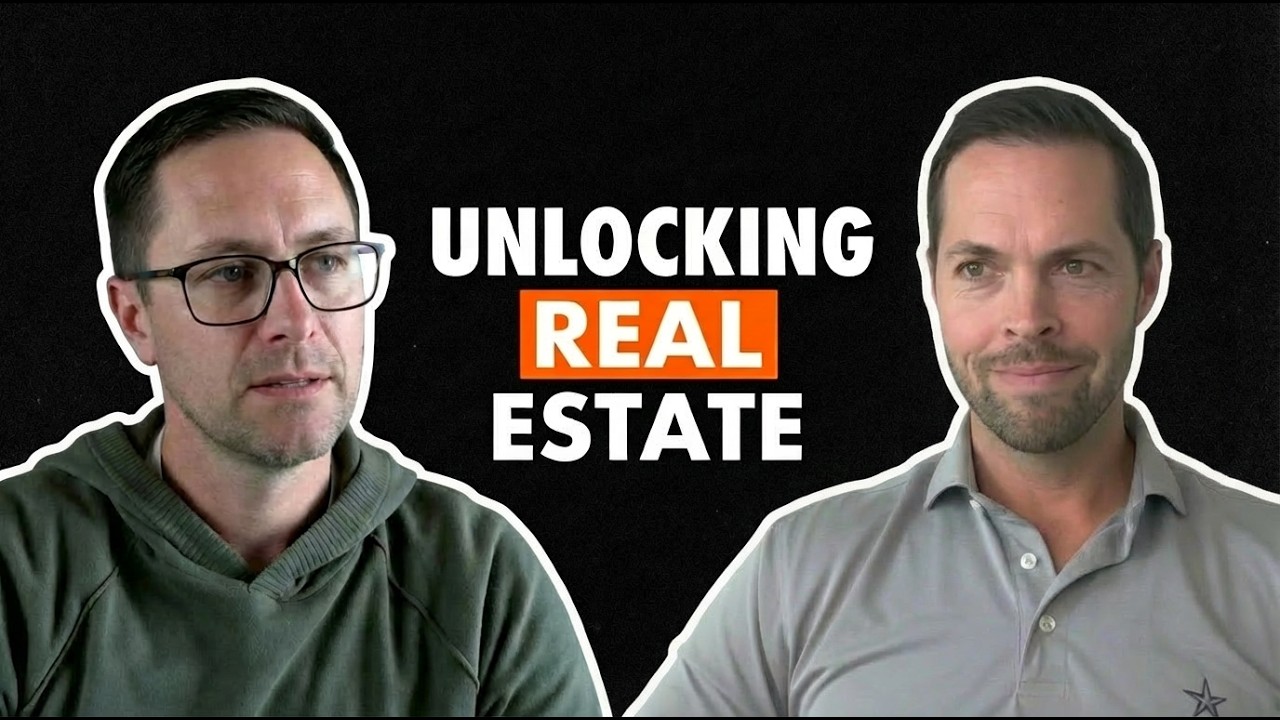


MyOps is a comprehensive real estate management platform designed to streamline operations and simplify property management tasks. It integrates seamlessly into existing real estate workflows, enhancing efficiency and productivity.
Key Takeaways
- MyOps was built from an operator problem, not a theoretical product idea.
The platform came out of Spears Group’s own frustration with scattered systems, inconsistent workflows, and limited financial visibility across the business. That matters because the product is rooted in actual team operations, not abstract software assumptions. - Their critique of real estate tech is really a critique of fragmentation.
The “flip phone era versus iPhone era” analogy is useful because it frames the problem clearly: too many teams are still operating across disconnected spreadsheets, docs, passwords, folders, and tools. MyOps is designed to centralize what already exists, not add another disconnected app to the stack. - MyOps is built for adoption by acknowledging how agents actually work.
The founders emphasize two design choices that matter: mobile usability and visual motivation. That reflects a practical understanding that tools only matter if producers will actually use them in the field and in the flow of their day. - The product is designed to reduce repeat questions, which is one of the clearest signs of broken systems.
One of the smartest observations in the conversation is that you can often measure the health of your systems by how often people have to ask the same questions. Repeated confusion is usually a process problem, not just a people problem - The broader thesis is that better systems create better lives, not just bigger teams.
One of the stronger undercurrents in the interview is that scale is not the only goal. Better operations can create more consistency, more visibility, and more time back for family, leadership, and the highest-value work.
Inside The Conversation
Why did Jonathan Spears and Maria decide to build MyOps instead of continuing to patch together existing tools?
They built it because existing systems were too fragmented to support a scalable, repeatable operation. The breaking point was realizing that core business information was scattered across spreadsheets, shared docs, passwords, and disconnected tools, which made the business feel disorganized rather than professional.
What problem does MyOps solve for team leaders specifically?
It gives team leaders visibility into how the business is actually running. That includes seeing financial performance more clearly, separating personal production from team production, tracking support workflows, and making sure institutional knowledge does not stay trapped inside one person’s head.
How does MyOps improve adoption among agents who usually ignore systems?
The founders say adoption improves when the system fits how agents already work. They built MyOps to be mobile-friendly, visually engaging, and tied to performance, which makes it more usable for agents in the field than a desktop-only back-office tool.
Can MyOps help a team create a more sellable business over time?
That is one of the more interesting claims in the interview. Jonathan argues that most agent businesses are hard to sell because the system of record is incomplete or trapped in people’s heads, inboxes, and folders. A centralized operating record could make the business more transferable and more valuable over time.
What is the biggest strategic lesson for a team leader from this conversation, even beyond the product itself?
Build the system before you chase more scale. Both founders make the case that adding more transactions, more agents, or more complexity without operational infrastructure only multiplies problems that already exist.
MyOps isn’t about more tech. It’s about finally running a real estate business like a real business
Real estate has no shortage of tools. What it still lacks, in far too many cases, is operational clarity.
Most teams don’t suffer from a lack of effort. They suffer from a lack of centralization. The data exists, the transactions are happening, the agents are producing, but the business itself is still being run through spreadsheets, Google Docs, shared drives, text threads and whatever happens to live inside the team leader’s head. That may work for a while. It does not scale well. And it certainly does not create consistency. That framing — sharp thesis first, followed by a practical industry problem and why it matters now — closely mirrors the way your sample pieces open.
That’s what stood out to me in my conversation with Jonathan and Maria about MyOps. They didn’t build technology because they wanted to become software founders. They built it because they had already built a successful real estate team and realized the backend of the business was still being managed in a way that felt more “flip phone era” than modern operating system. Maria described stepping into the business from an operator’s perspective and mapping everything it took to make the company work, from listings and marketing to internal process, agent support and financial visibility. What they found was a familiar industry problem: too many moving parts and no real centralized hub for the business to run through.
Production can hide operational weakness
One of the more important points Jonathan made is that high production can mask weak business management.
That’s a problem a lot of agents and team leaders know well, even if they don’t say it out loud. Revenue can make a business look healthy from the outside while profitability, structure and process are a mess behind the scenes. Jonathan talked about producing at a high level and then looking at the profit margins and asking the question too many top producers eventually run into: where did the money go? His answer was blunt. Most producers are so busy catching dollars that they are not paying close enough attention to how the business is being managed once those dollars arrive.
That distinction matters because real estate has long rewarded production first and operating discipline second. But once a business reaches a certain size, charisma and volume stop being enough. Teams need systems. They need visibility. They need a way to understand not just what they sold, but how the business actually functions. In that sense, MyOps is not trying to solve a lead generation problem. It is trying to solve a business maturity problem. That kind of framing — moving the conversation from features to category-level business implications — is also consistent with how your AI article turns a product conversation into a larger industry point.
The real problem isn’t missing data. It’s scattered data
What Jonathan and Maria describe is a reality most experienced team leaders will recognize immediately: the issue is rarely that the information does not exist. The issue is that it exists everywhere.
Lockbox instructions are in one place. Listing details are in another. Inspection reports are somewhere else. Notes live in a text thread, a shared note, a CRM field no one updates, or inside the memory of the one operator everyone depends on. That creates drag. It creates repeated questions. It creates dependence on specific people instead of on a repeatable system. Jonathan described MyOps as a way to centralize that information and make it accessible quickly through AI, while Maria explained that the platform was built around the repeatable processes teams should already be following.
That is what makes the product more interesting than a simple finance dashboard. In the interview, I pushed on that point directly because from the outside it was obvious that the platform was doing more than helping agents read a P&L. Jonathan confirmed that. His answer was that yes, data entry matters, but the bigger opportunity is replacing archaic methods of tracking and retrieving information with structured workflows that actually help people in real time. Rather than asking every team to invent its own process, they built the “mousetraps” for common operational moments, from taking a listing live to retrieving information while a client is on the phone.
Technology should reduce friction, not create more of it
Too often, real estate technology adds another tab instead of solving the problem.
That’s one reason this conversation felt more grounded than the average proptech pitch. Jonathan and Maria are not describing a tool that sits off to the side. They are describing a system of record — something that becomes part of the way the business runs day to day. And if it works the way they describe it, the value is not just speed. It is professionalism.
If an agent can instantly pull access instructions, inspection details or listing information while a consumer is on the phone, that changes the experience. It reduces hesitation. It reduces confusion. It makes the agent sound more prepared because they are more prepared. The same way your developer piece argues that better data helps agents show up with more value and less friction, MyOps is built around the idea that operational access is its own form of professional leverage.
The bigger takeaway here is that technology should remove busywork and reduce repeated interruptions, not create another layer of them. Teams should not have to toggle across disconnected systems, rely on memory or repeatedly ask the same operator the same question to keep a transaction moving. That kind of inefficiency is expensive, even when nobody is measuring it.
Consistency is the real product
The strongest line in the interview may have been Jonathan’s core principle: agents operate as hobbyists, and the goal is to help them move from hobbyist to professional.
That is a sharp observation, and an uncomfortable one. But it is also true. Too many agents are still building businesses around momentum swings, emotional highs and lows, and reactive habits instead of repeatable systems. Jonathan said it bothers him to watch agents close a big deal, feel like they are on top of the world, then slide all the way back down and have to rebuild from scratch again. What he wants is consistency. And in many ways, that is what MyOps is really selling. Not just technology. Consistency.
Maria made a similar point later in the conversation when I asked what advice she would give a team leader trying to build a scalable business. Her answer was simple and correct: start with system and process before you keep adding more transactions. More agents and more deals do not solve operational weakness. They expose it. Jonathan followed that up with a different version of the same message, using the Rich Dad Poor Dad analogy of carrying buckets versus building a pipeline. Buckets create immediate activity. Pipelines create durable consistency. That is a useful framework for any team leader who is confusing effort with infrastructure.
What this means for team leaders
The best way to read this conversation is not as a software launch story, but as a warning to team leaders who are trying to scale without a real operating system.
If your business still depends on one person remembering everything, on agents asking the same questions over and over, or on leadership force-of-will to keep things moving, you do not have a scalable platform. You have a fragile one. MyOps is built around the belief that teams need a centralized record of how the business runs, what data matters, and how people access it. That is not glamorous, but it is foundational.
And that is why this conversation matters now. AI is everywhere in real estate, but clean operations still are not. The agents and teams that create separation over the next few years will not just be the ones experimenting with AI prompts or marketing shortcuts. They will be the ones using technology to create better systems, better visibility and better decision-making. That is how the gap between average and elite widens in any industry: not just through talent, but through structure. That connection between tech adoption and professional separation is a clear throughline in your AI sample and maps naturally onto this MyOps conversation.
At the end of the day, that is what I took from this interview. MyOps is not really a story about adding more technology to the stack. It is a story about reducing fragmentation, building repeatable process and helping real estate businesses operate with more discipline. In an industry full of motion, that may be one of the most valuable advantages left.
Interview Highlights - Must See
Stay Ahead of the Curve
Get weekly PropTech insights, exclusive reviews, and industry trends delivered straight to your inbox.
No spam. Unsubscribe anytime. Read our privacy policy.
Powered by Constant Contact 